Quick Answer
The eight most effective cricket fielding drills are: 1) Catching triangle, 2) Relay throw circuit, 3) Crow-hop throw drill, 4) Low catch reflex drill, 5) Ring of fire, 6) Boundary sprint-and-dive, 7) Slip catching cradle, 8) Live run-out drill. Each targets a specific skill and can be combined into a 45-minute fielding session.
Why Fielding Is Cricket's Most Undercoached Skill
Ask any club coach what their team's weakest area is, and the answer is almost always fielding. Batting and bowling get structured practice. Fielding gets whatever time is left — usually not much.
This is a strategic mistake. Every dropped catch costs wickets. Every misfield costs four runs. In a close T20 match, two dropped catches and two overthrows is the difference between winning and losing.
Drill 1: The Catching Triangle (High Catches)
PLAYERS: 3 per triangle | EQUIPMENT: 1 ball per triangle
Three players form a triangle approximately 20 metres apart. Player A hits or throws a high catch to Player B, who takes the catch and immediately hits or throws to Player C. Rotate continuously.
FOCUS: Move to get under the ball early — don't wait for it to come to you. Hands together, fingers pointing up for balls above eye level.
PROGRESSION: Increase distance. Add movement — players must sprint to their catching position.
Drill 2: The Relay Throw Circuit (Throwing Accuracy)
PLAYERS: Groups of 5 | EQUIPMENT: 1 ball, cones
Set out four cones in a 40-metre line. Ball is thrown from Cone 1 to Cone 2, caught and immediately thrown to Cone 3, caught and immediately thrown to Cone 4 — simulating relay throws used to prevent twos and threes in the field.
FOCUS: Accuracy over power. A relay throw that misses the next fielder is a disaster — accuracy at a short target is the skill.
Drill 3: The Crow-Hop Throw (Long Throws from Boundary)
PLAYERS: Pairs | EQUIPMENT: 1 ball per pair
The crow-hop is the technique used to generate power on long boundary throws: a small skip-step as you collect the ball that positions your body sideways-on, allowing a full-arm throw. Without it, most cricketers lose 20–30% of their throwing distance.
Player A rolls or throws to Player B at the boundary. Player B fields, executes the crow-hop, and throws full-arm to a target near the stumps. Rotate after 10 throws.
FOCUS: The skip-step timing — it must happen as you're picking up, not before. Body sideways-on, non-throwing arm pointing at the target.
Drill 4: Low Catch Reflex Drill (Slip and Short Leg)
PLAYERS: 1 coach, 2–6 fielders | EQUIPMENT: 1 ball, catching cradle or bat
The coach feeds sharp, fast, low deliveries at varying angles from close range (5–8 metres). Fielders must react purely on reflex — there is no time to think about technique at this distance.
FOCUS: Hands soft and relaxed — tense hands drop catches. Head still. Take the ball as late as possible.
Drill 5: Ring of Fire (Throwing Under Pressure)
PLAYERS: 8–12 | EQUIPMENT: 2–3 balls
Players form a large circle (25–30 metres diameter). Two or three balls move simultaneously around the circle — thrown directly across the circle, not around it. Players must concentrate on their own ball while tracking others.
FOCUS: Communication (call for the ball early), quick release, accuracy under distraction.
Drill 6: Boundary Sprint-and-Dive (Athleticism)
PLAYERS: Any number | EQUIPMENT: 1 ball, boundary marker
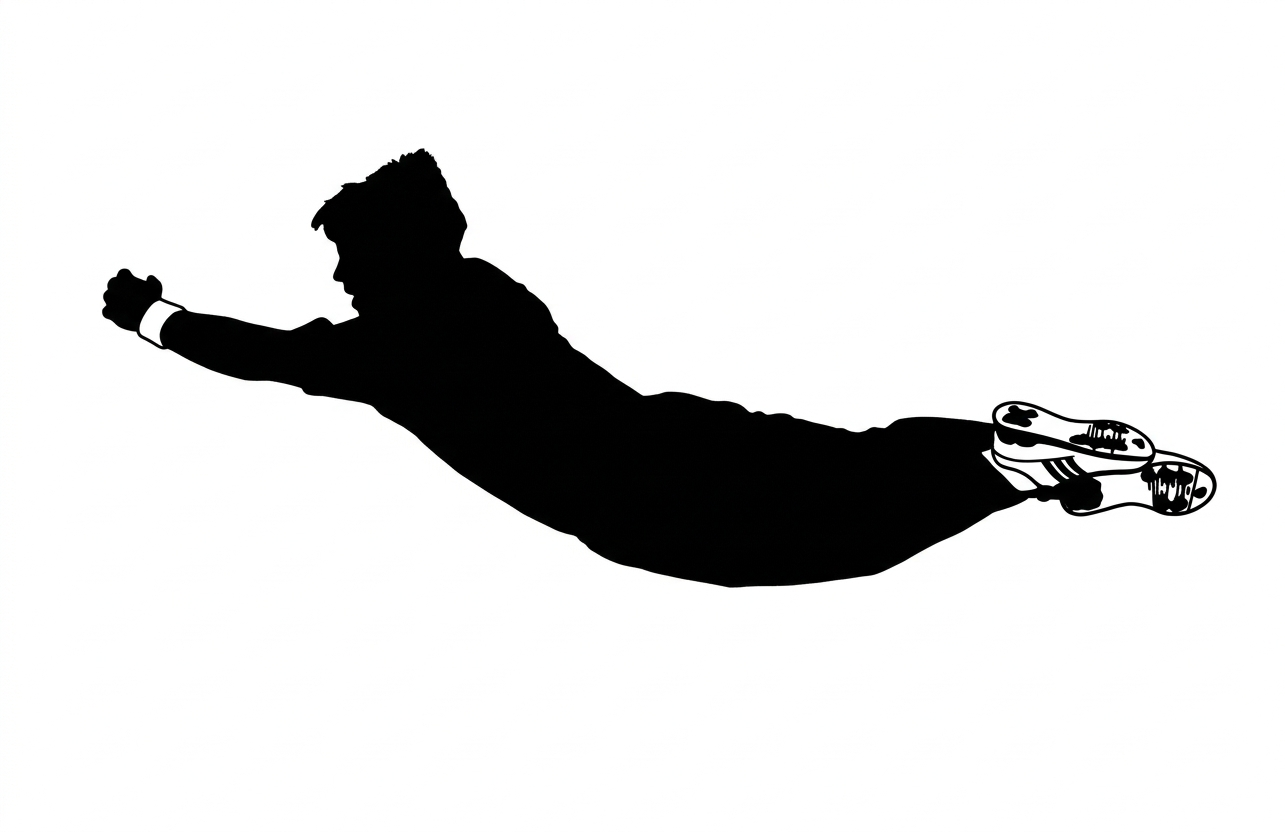
A ball is hit or thrown toward the boundary. The fielder sprints at full pace, slides or dives to intercept before the rope, gets up immediately, and returns the throw to the stumps — against a stopwatch.
FOCUS: Commitment to the dive (hesitating is worse than not trying), slide technique, and the rapid throw after retrieving.
Drill 7: Slip Catching Cradle
PLAYERS: 3–5 in a slip cordon | EQUIPMENT: Catching cradle or bat
A coach hits balls off the edge of a bat (or off a catching cradle) at varying heights, speeds, and angles toward the slip cordon.
FOCUS: Starting position (weight on balls of feet, hands relaxed in front of body), lateral movement without crossing feet.
Drill 8: The Live Run-Out Drill
PLAYERS: Batsman, fielder, wicketkeeper/target, coach | EQUIPMENT: Stumps, 1 ball
A batsman runs between the wickets for a single or attempted second run. A fielder must field cleanly, decide which end to throw to, call clearly, and hit the stumps — with wicketkeeper/bowler alert and ready.
FOCUS: The decision (always throw to the end closer to the ball), communication, and accuracy under time pressure.
45-Minute Session Plan
| Time | Drill | Skill Focus |
|---|---|---|
| 0–5 min | Crow-hop throw warm-up (pairs) | Long throw technique |
| 5–13 min | Catching triangle | High catches, communication |
| 13–21 min | Relay throw circuit | Throwing accuracy, speed |
| 21–29 min | Slip catching cradle / low catch reflex | Reactions, soft hands |
| 29–37 min | Ring of fire | Throwing under pressure |
| 37–45 min | Live run-out drill (competitive) | Decision-making, accuracy |
How To Field Like A Pro | Fielding Masterclass With Carl Hopkinson

England's lead fielding coach, Carl Hopkinson, demonstrates drills focusing on start positions and movement. The tutorial features a series of progressively challenging exercises, starting with simple ball-catching practice. Learn techniques to improve reactions and smooth movements towards the ball.
Frequently Asked Questions
What is the most important fielding skill in cricket?
Catching — because dropped catches directly cost wickets. However, throwing accuracy is equally important at club level where run-outs are a major factor. Both should feature in every fielding session.
How do I stop dropping catches in cricket?
Most dropped catches come from two causes: tense hands (gripping rather than receiving) and moving eyes off the ball in the final moment. Focus on relaxed hands and watching the ball all the way into your fingers.
How often should a cricket team do fielding drills?
For club teams, a dedicated 30–45 minute fielding session at every practice will produce visible improvement within four to six weeks. Most club cricketers do zero dedicated fielding practice — any structured work puts you ahead of the competition.
What is a crow-hop in cricket?
The crow-hop is a small skip-step taken as you field a ball from the boundary. It positions your body sideways-on to the target, allowing a full-arm throw with maximum power and accuracy. Without it, throws from the boundary lose significant distance.