Quick Answer
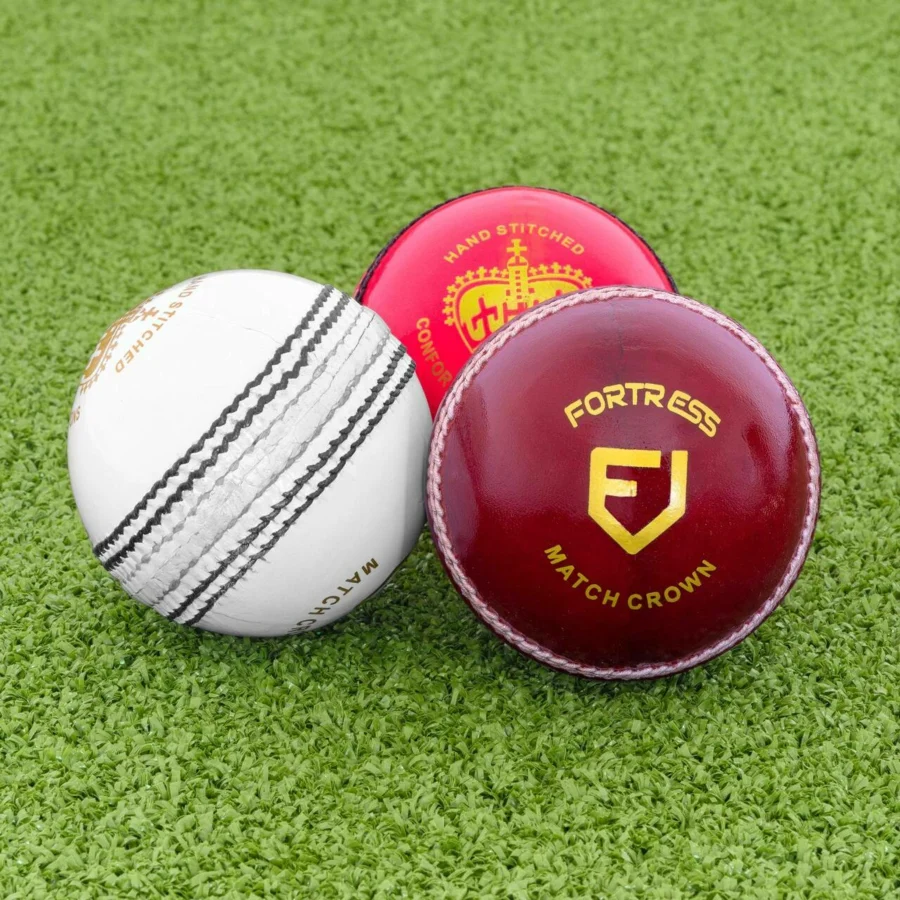
The best cricket ball depends on your format and surface: Dukes (red, Tests in England/West Indies), Kookaburra (red/pink, Tests in Australia/Asia), SG (red, Tests in India), Kookaburra or Readers (white, limited-overs). For club cricket, the Readers County Supreme (red, £22) and Kookaburra County (white, £18) are the best all-round options.
The Three Test Match Balls
| Ball | Used In | Construction | Key Characteristic |
|---|---|---|---|
| Dukes | England, West Indies Tests | Hand-stitched, prominent seam | More swing for longer |
| Kookaburra | Australia, SA, NZ, Pakistan, SL Tests | Machine-stitched, flat seam | Better reverse swing later |
| SG | India Tests | Hand-stitched | Conventional swing early, faster deterioration |
The Dukes Ball
The Dukes ball is the traditional English Test match ball — hand-stitched with a pronounced seam that holds its shape far longer than machine-stitched alternatives. It moves more in the air and off the pitch, which is why English conditions favour swing bowling. Used in Test cricket in England and the West Indies.
The Kookaburra Ball
The Kookaburra is machine-stitched, harder, and flatter-seamed than the Dukes. It doesn't swing as much in the first 10–15 overs but becomes more responsive to reverse swing later as the ball deteriorates. Most international cricket outside England uses the Kookaburra.
The SG Ball
The SG ball — made by Sanspareils Greenlands in India — is used exclusively in Test matches in India. Hand-stitched like the Dukes, it offers conventional swing early but tends to deteriorate faster and behaves differently on Indian pitches compared to other balls.
White Balls: Limited-Overs Cricket
White balls are used in ODI and T20 cricket. Two white balls (one from each end) are used per ODI innings, each for 25 overs — with new 2025 ICC Playing Conditions rules affecting how the second half of the innings is managed (see our ICC Rule Changes article).
Club Cricket: Best Balls by Budget
| Ball | Price | Best For |
|---|---|---|
| Readers County Supreme (red) | £22 | Club red-ball cricket — excellent seam, good durability |
| Kookaburra County (white) | £18 | Club white-ball cricket — consistent performance |
| Readers Club Special | £14 | Recreational cricket, youth matches |
| Gray-Nicolls Club (red) | £16 | Club cricket on hard pitches |
Practice Balls: Don't Neglect Your Training
The type of ball you practice with matters. Leather training balls (£8–£15) behave closest to match conditions and are the best choice for serious practice sessions. Composite or increment balls are harder and more durable for nets where leather balls deteriorate too quickly — but are less match-realistic.
Caring for Your Cricket Ball
- Keep one side polished and one side rough — this asymmetry creates swing
- Store balls in a dry environment — moisture causes the seam to swell and the leather to crack
- Avoid storing cricket balls in direct sunlight for extended periods — UV degrades the leather
- Saliva is now banned for ball maintenance — use sweat and ICC-approved substances only
DIFFERENT TYPES OF CRICKET BALLS I BRETT LEE TV I CRICKET

Which one is your favourite cricket ball and why? Tell me in the comments section after you see this video! Here's a primer on the types of cricket balls and how they're different from each other! If you like this video, please like and share it with your teammates and friends and tag me on social media!
Frequently Asked Questions
What ball is used in Test cricket?
It depends on the host country. England and West Indies use the Dukes ball. India uses the SG ball. All other Test nations use the Kookaburra.
What is the difference between a Dukes and Kookaburra ball?
The Dukes is hand-stitched with a prominent seam that produces more swing for longer. The Kookaburra is machine-stitched with a flatter, harder seam — it swings less early but deteriorates in ways that encourage reverse swing in older overs.
What cricket ball should I buy for club cricket?
For red-ball club cricket, the Readers County Supreme (£22) is an excellent choice. For white-ball cricket, the Kookaburra County (£18) is widely used. Both offer match-quality performance at a reasonable price.
How long does a cricket ball last?
In Test cricket, a ball is replaced after 80 overs. In ODIs, each ball lasts 25 overs. Club cricket balls typically last 1–3 matches depending on pitch conditions and usage.
Sources
- ECB – Playing Conditions and equipment
- ICC Playing Conditions 2025
- Kookaburra, Dukes, SG, Readers product information