Quick Answer
Women's cricket has a history almost as long as men's — the first recorded women's match was played in Surrey, England, in 1745. The Women's Cricket Association was formed in England in 1926, and the first Women's Test match was played in 1934. The ICC Women's Cricket World Cup began in 1973 — two years before the men's equivalent. Women's professional contracts at full scale are a 21st-century development, but the game's roots are deep.
The 1745 Match: Women's Cricket Older Than You Think
Most people assume women's cricket is a relatively modern development — a late-20th-century expansion of the game into new territory. The history tells a very different story.
According to the ICC's official cricket history, the first recorded women's cricket match took place on 26 July 1745 in the village of Bramley in Surrey, England. The match was between women from Bramley and women from Hambledon — the same Hambledon that would become famous for its men's club later in the century.
A report in the Reading Mercury newspaper described the match in some detail, noting that the players "bowled, batted, ran, and catched as well as most men could do." There is nothing condescending in this account — it was written by a journalist who clearly expected women to play cricket, suggesting the practice was not unusual.
The score is not recorded, but the existence of the match itself — played with the same equipment and on the same length pitch as men — challenges the assumption that women's cricket was ever marginal in its origins. (Source: ICC – History of Cricket)
Cricket and Class: Women's Cricket in the 18th and 19th Centuries
For the latter half of the 18th century and much of the 19th, women's cricket operated in a social space that mirrored men's cricket — aristocratic patrons organised it, working women played it, and betting was involved.
There are records from the late 18th century of gambling matches between village women in Sussex and Surrey that drew crowds. In 1811, a match between eleven women from Hampshire and eleven from Surrey at Ball's Pond in London attracted a crowd estimated at several thousand. (Source: Wikipedia – Women's Cricket)
As the Victorian era progressed, the social climate became less accommodating for women playing competitive sport. Victorian attitudes toward femininity, physical activity, and appropriate female behaviour pushed women's cricket toward schools and private social circles rather than public competitive matches. It was still played — widely and enthusiastically — but it became less visible.
The introduction of cricket to girls' schools from the 1880s onward was arguably more significant for the long-term development of women's cricket than the public matches of the 18th century. Schools including Roedean (founded 1885) incorporated cricket into their curriculum, and the skill base they developed produced the players who would, in the 20th century, build formal women's cricket structures.
1926: The Women's Cricket Association Founded
The formal institutionalisation of women's cricket in England began in 1926, with the founding of the Women's Cricket Association (WCA) in England — one of the first formal women's cricket organisations in the world.
The WCA immediately set about standardising the game: creating a women's county structure, organising national competitions, and — crucially — writing to counterpart organisations in other countries to establish international fixtures.
Australia formed the Australian Women's Cricket Council in 1931, New Zealand in 1934, and South Africa in 1952. These organisations were all initially independent and were not formally affiliated with any men's cricket body. Women's cricket, for much of the 20th century, ran its own affairs entirely separate from the men's game. (Source: Wikipedia – Women's Cricket Association)
1934: The First Women's Test Match
The first ever Women's Test match was played in December 1934 in Brisbane, Australia — between England and Australia. England won the match by nine wickets.
The match was organised by the recently formed Australian Women's Cricket Council at the invitation of the WCA. It was played to the same Laws as the men's game and drew respectful press coverage in both countries. The series — three Tests in total — was won by England 2–0. (Source: ESPNcricinfo – Women's Test cricket history)
The early Women's Tests attracted strong crowds by the standards of the era, but they were not formally endorsed or supported by the men's cricket boards of either country. Women's cricket in this period was genuinely self-organised — run, funded, and administered entirely by women's organisations using their own resources.
New Zealand played their first Women's Test in 1935 (against England), and India in 1976. South Africa and Pakistan joined the Women's Test arena later.
1973: The First Women's World Cup — Before the Men's
Here is a fact that surprises many cricket fans: the first-ever Cricket World Cup was the Women's World Cup, played in England in 1973 — two years before the men's first World Cup in 1975.
The 1973 Women's World Cup was organised almost entirely through the efforts of Rachel Heyhoe Flint, the England women's captain who was one of the most formidable figures in cricket administration and advocacy. She lobbied for the tournament, helped organise sponsorship (Anglia Sports sponsored it), and captained England through the competition.
England won the first Women's World Cup, defeating Australia in the final at Edgbaston. Seven teams participated: England, Australia, New Zealand, Jamaica, Trinidad and Tobago, Young England, and an International XI. (Source: Wikipedia – 1973 Women's Cricket World Cup)
The men's equivalent — the Prudential World Cup — followed in 1975. The women's game had beaten them to the idea by two years.
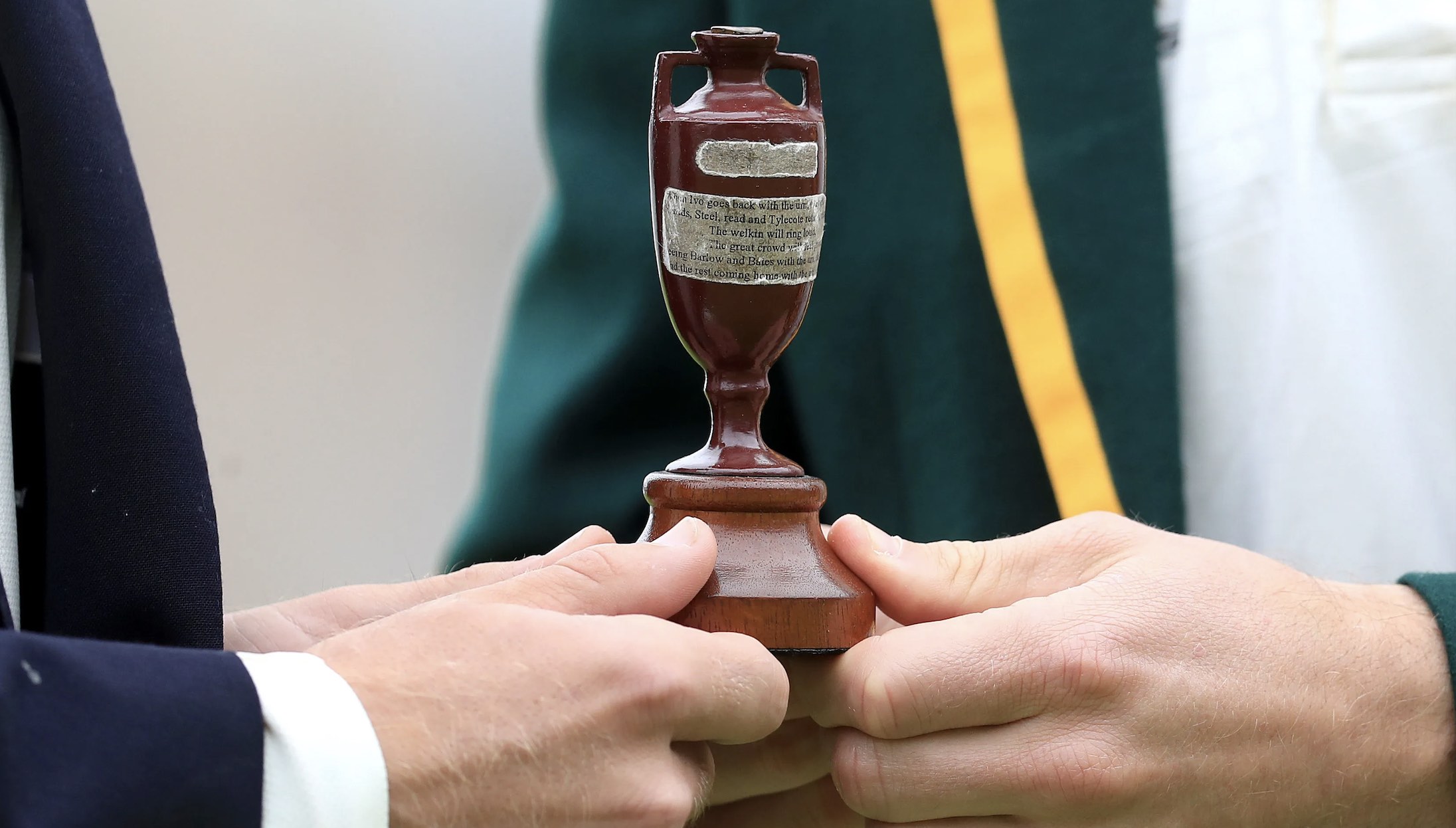
The story of the first Women's Cricket World Cup Trophy
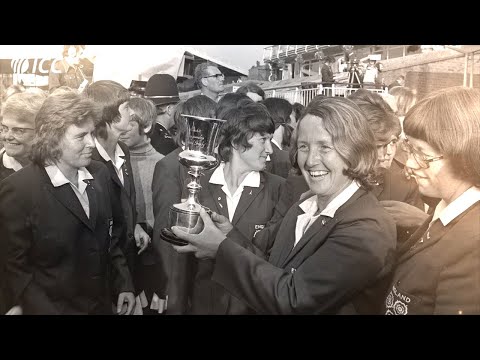
To celebrate the monumental announcement about equal prize money for men’s and women’s teams at ICC events, here’s some insight into the trailblazing 1973 tournament and its trophy.
The ICC Takes Over Women's Cricket: 2005
For most of the 20th century, women's cricket was governed by the International Women's Cricket Council (IWCC), an entirely separate body from the men's International Cricket Council. The two organisations operated in parallel, occasionally communicating but largely independent.
In 2005, the IWCC and the ICC merged. Women's cricket became formally part of the ICC's remit for the first time. This was a watershed moment — it brought women's cricket under the same global governance structure as men's cricket, with access to the ICC's financial resources and institutional weight.
The merger coincided with a sustained push to develop women's cricket in non-traditional markets, improve the quality of international competitions, and — eventually — create professional playing conditions for women. (Source: Wikipedia – ICC)
The Professional Era: 2014 Onward
Women's professional cricket in the modern sense — contracts, central agreements, full-time training — began to materialise at scale from around 2014, when Cricket Australia signed the first central contracts for women players.
England's ECB followed with central contracts for women in 2014 as well. The BCCI — historically reluctant to invest in women's cricket — signed its first contracts for India women's players in 2016.
The Women's Big Bash League (WBBL) in Australia, launched in 2015, was a turning point for women's cricket commercially. Playing alongside (and initially inside) the men's BBL schedule, the WBBL attracted broadcast coverage, audiences, and a growing fan base that demonstrated women's cricket could work as entertainment in its own right.
The The Hundred competition in England, launched in 2021 with men's and women's competitions running simultaneously, was the most explicit attempt yet to give women's cricket equal billing and equal prize money alongside men's cricket.
The ICC Women's T20 World Cup 2020 in Australia, held at the Melbourne Cricket Ground with a crowd of 86,174 — the largest crowd ever to attend a women's cricket match — was perhaps the single clearest demonstration of where women's cricket had arrived. (Source: ICC – Women's T20 World Cup)
Key Milestones: Women's Cricket Timeline
| Year | Milestone |
|---|---|
| 1745 | First recorded women's cricket match (Bramley vs Hambledon, Surrey) |
| 1811 | First large-crowd women's match (Hampshire vs Surrey, London) |
| 1887 | Original White Heather Club (first women's cricket club) founded in Scotland |
| 1926 | Women's Cricket Association (WCA) founded in England |
| 1931 | Australian Women's Cricket Council founded |
| 1934 | First Women's Test match (England vs Australia, Brisbane) |
| 1958 | International Women's Cricket Council (IWCC) founded |
| 1973 | First Women's Cricket World Cup (held in England — two years before men's) |
| 1976 | India women play their first Test match |
| 2005 | IWCC merges with ICC — women's cricket under unified global governance |
| 2014 | First central contracts for women players (Australia and England) |
| 2015 | Women's Big Bash League (WBBL) launched in Australia |
| 2016 | BCCI signs first contracts for India women's players |
| 2020 | Melbourne Cricket Ground hosts Women's T20 World Cup final: 86,174 crowd |
| 2021 | The Hundred launched with equal billing for women's competition |
FAQ: Women's Cricket
When was the first women's cricket match? The first recorded women's cricket match was played on 26 July 1745, between women from Bramley and Hambledon in Surrey, England. The match was reported in the Reading Mercury newspaper.
When was the first Women's World Cup in cricket? The first Women's Cricket World Cup was held in 1973 in England — two years before the first men's Cricket World Cup in 1975. England won the 1973 tournament, defeating Australia in the final at Edgbaston.
Who is the greatest women's cricketer of all time? Several players are cited for this honour. Australia's Meg Lanning (retired 2023) is the most decorated women's captain in history, winning six Women's T20 World Cups. England's Heather Knight, India's Mithali Raj (the highest run-scorer in women's international cricket), Australia's Ellyse Perry, and West Indies' Stafanie Taylor are all strong contenders. Rachel Heyhoe Flint of England is often cited for her off-field contribution in founding the Women's World Cup.
When did women's cricket become professional? Women's cricket began becoming fully professional from around 2014, when Australia and England signed the first central contracts for women players. The BCCI followed in 2016. The Women's Big Bash League (2015) and The Hundred (2021) accelerated this transition commercially.
Who governs women's cricket? Since 2005, when the International Women's Cricket Council merged with the International Cricket Council (ICC), women's cricket is governed by the ICC at international level — the same body that governs men's cricket. Domestic women's cricket is governed by each country's national cricket board.
What is the highest attendance for a women's cricket match? The Women's T20 World Cup Final on 8 March 2020, at the Melbourne Cricket Ground between Australia and India, drew a crowd of 86,174 — the largest attendance ever recorded for a women's cricket match.
Sources
- ICC – History of Cricket (Women)
- Wikipedia – Women's Cricket
- Wikipedia – 1973 Women's Cricket World Cup
- ESPNcricinfo – Women's Cricket history
- Wikipedia – Women's Cricket Association
More on LookCricket:
The Laws of Cricket: A Complete History from 1744 to Today
The Beginning of Professional Cricket